
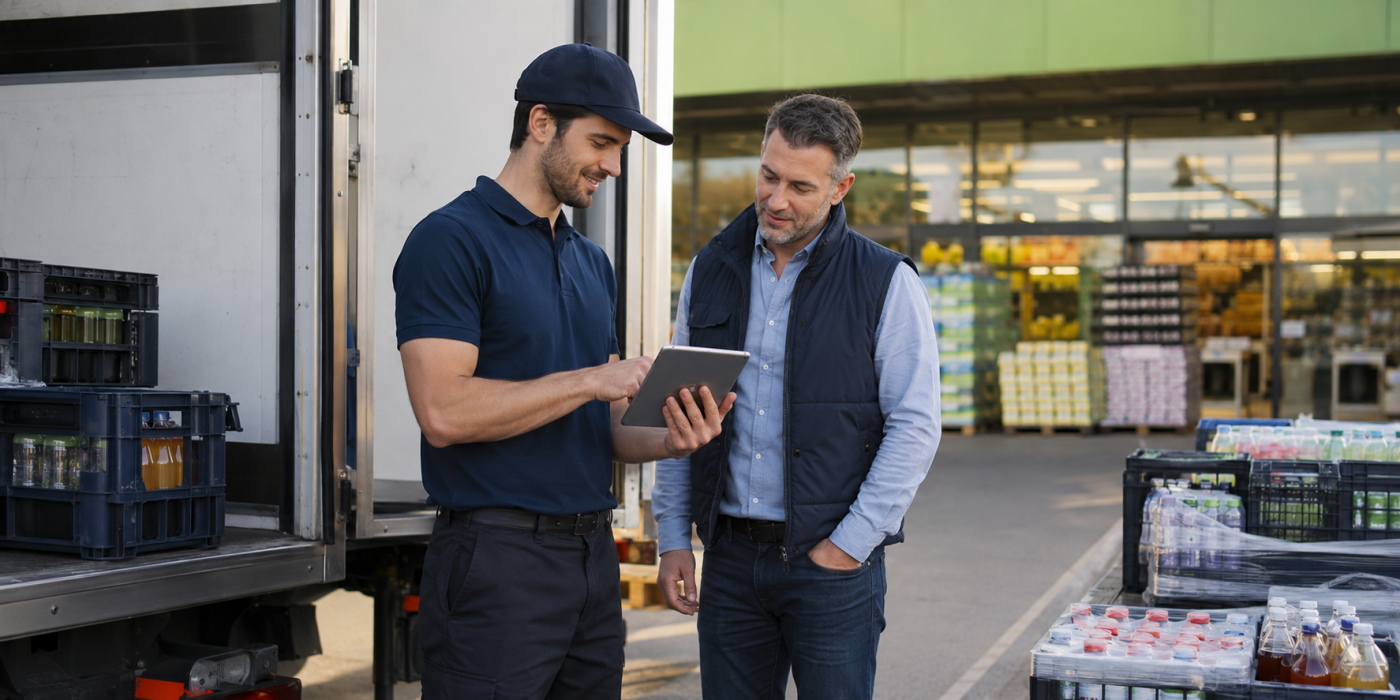
To improve customer satisfaction in delivery, food distributors need to look at every step of the route. A happy customer does not only care about speed. They care about the right items, fresh products, clear credits, clean invoices, and drivers who know how to handle store problems. This matters even more in food Direct Store Delivery, or food DSD, because one visit often includes delivery, returns, billing, checkout, and customer service. A store manager will remember when drinks arrive after the lunch rush, when bakery items come in short, or when the invoice does not match the products on the shelf. Good delivery service creates the opposite feeling. The customer knows when the truck will arrive, receives the right products, understands any shortage, and can keep selling without extra calls. This article explains how food DSD businesses can improve customer satisfaction in delivery with stronger routes, better driver workflows, cleaner billing, and tools such as the Distributal app.
Delivery Satisfaction Starts Before the Truck Leaves
Many delivery problems begin before the driver reaches the customer, so the warehouse should act as the first customer service checkpoint. Food DSD teams need to confirm product names, SKUs, case quantities, unit quantities, dates, and customer notes before loading. Unit clarity is especially important because a customer may order two cases while the warehouse prepares two units, or a driver may record six returned bottles as six returned cases. Loading order also affects the customer experience because drivers lose time when the first stop is buried behind later stops, and products can get damaged when heavy cases crush fragile goods. A better process starts with route review, clean product checks, careful loading, and clear shortage notes before the truck leaves. Distributal can support this workflow by connecting delivery tasks, product counts, warehouse-to-vehicle transfers, and checkout steps, so drivers begin the route with clearer information instead of relying on memory or paper notes.
Make Order Accuracy the Main Promise
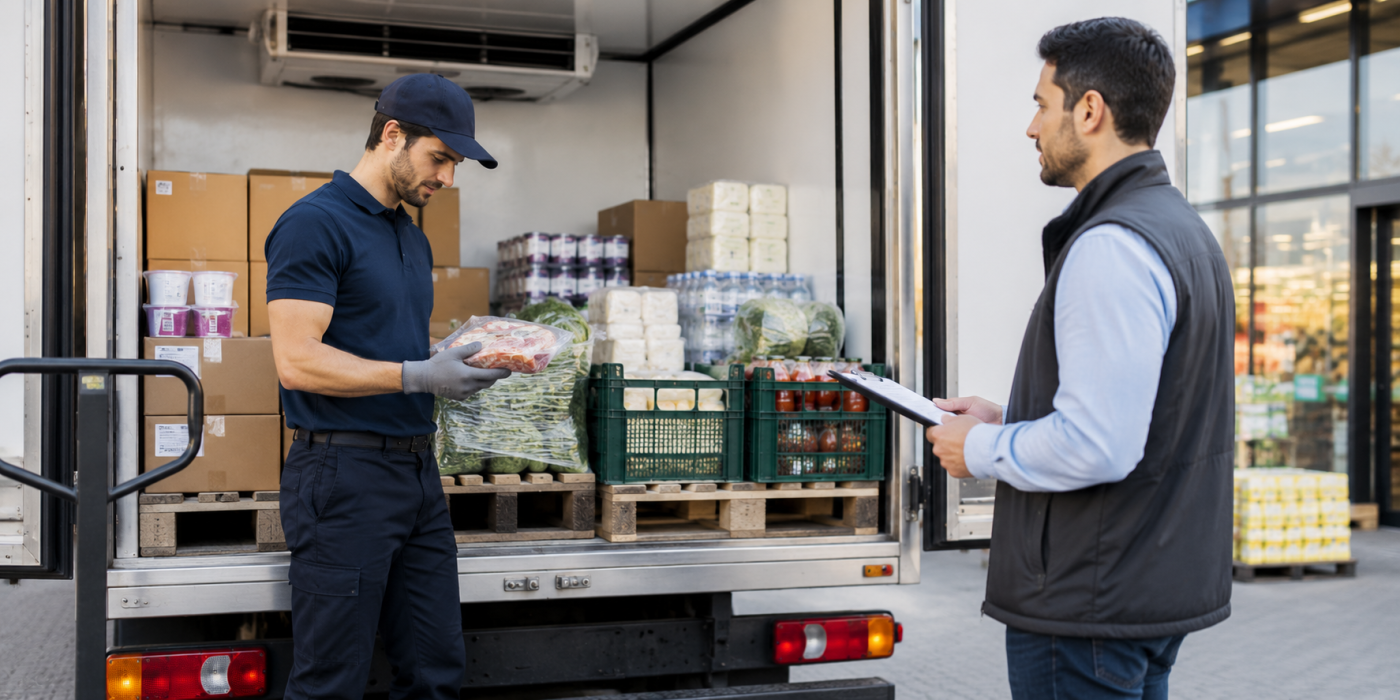
Order accuracy matters because a wrong delivery creates more work for the customer after the truck leaves. In food DSD, accuracy means the right product, right quantity, right unit, right price, and right condition. A beverage distributor may deliver sparkling water instead of still water. A bakery supplier may send the right bread in the wrong pack size. A dairy distributor may deliver the correct item with dates too close to expiry. Each mistake damages trust. Drivers need a simple way to verify delivery items at the stop, while office teams need clean records when customers call about missing items, credits, or invoice questions. Better accuracy also helps sales because customers order more confidently when they trust the supplier. They stop building backup stock “just in case” and spend less time checking every detail.
Give Customers Delivery Windows They Can Trust
Customers do not need a perfect delivery time every day, but they do need a delivery window they can plan around. A store manager can handle a 9:00 to 11:00 window if the truck usually arrives inside that window. Problems start when the promise does not match reality. Food DSD routes need realistic timing based on real stop time, receiving rules, traffic, unloading work, and customer habits. A map may show that two stores are close, but one store may have a slow dock, another may require security check-in, and another may have only one receiver in the morning. Managers should review arrival times, service times, route sequence, and repeated delays often. If one route runs late every week, the route needs improvement. Clear updates also protect trust when delays happen because a short message helps the customer plan instead of waiting in silence.
Keep Food Fresh, Safe, and Ready to Sell
Food delivery satisfaction depends on product condition because the customer wants items they can sell or use right away. If products arrive warm, crushed, dirty, leaking, expired, or close to expiry, the delivery fails even when the truck arrives on time. Food DSD teams should protect quality from warehouse to shelf by checking dates, separating fragile items, protecting chilled goods, and keeping returns away from sellable stock. Product handling should match the product type. Bread needs gentle stacking, dairy needs temperature care, beverages need stable loading, frozen products need fast unloading, and snacks need protection from crushing. Drivers should record rejected items, damaged cases, expired stock, and return reasons before leaving the store. These small steps protect repeat orders, shelf space, and brand trust.
Train Drivers to Act Like Service Representatives
Drivers often have more face time with customers than anyone else in the company, so their behavior shapes how customers feel about the business. A good DSD driver does more than move boxes. They confirm the delivery, explain shortages, handle returns, record credits, answer simple questions, and know when to escalate a problem. Training should use real store situations, such as missing items, damaged goods, refused products, unclear credits, and invoice questions. Clear scripts can help drivers sound professional without sounding robotic. For example, a driver can say, “We are short two cases today. I have noted it here, and the invoice will only include what you accepted.” Distributal can help drivers follow the same process at every stop by guiding them through delivery tasks, credit tasks, billing, and checkout. This gives customers a more consistent experience, even when different drivers cover the same route.
Make Returns, Credits, and Billing Easy to Understand
Returns and credits can either build trust or destroy it because they directly affect money. Customers understand that food products may expire, break, leak, or get rejected, but they do not like confusion about what will be credited and when it will appear. A clean credit process should record the product, quantity, unit type, reason, condition, and customer confirmation before the driver leaves. Billing should also match the real delivery event. If the customer accepted eight cases instead of ten, the invoice should show eight. If the driver collected two damaged units, the credit should show the correct unit count. Paper-based delivery creates risk because notes can get lost, drivers can forget details, and office teams can enter the wrong unit. Distributal helps food DSD teams bring delivery, credits, billing, and checkout into one mobile workflow, so drivers and back-office teams can work from the same record.
Practical Ways to Improve Customer Satisfaction in Delivery
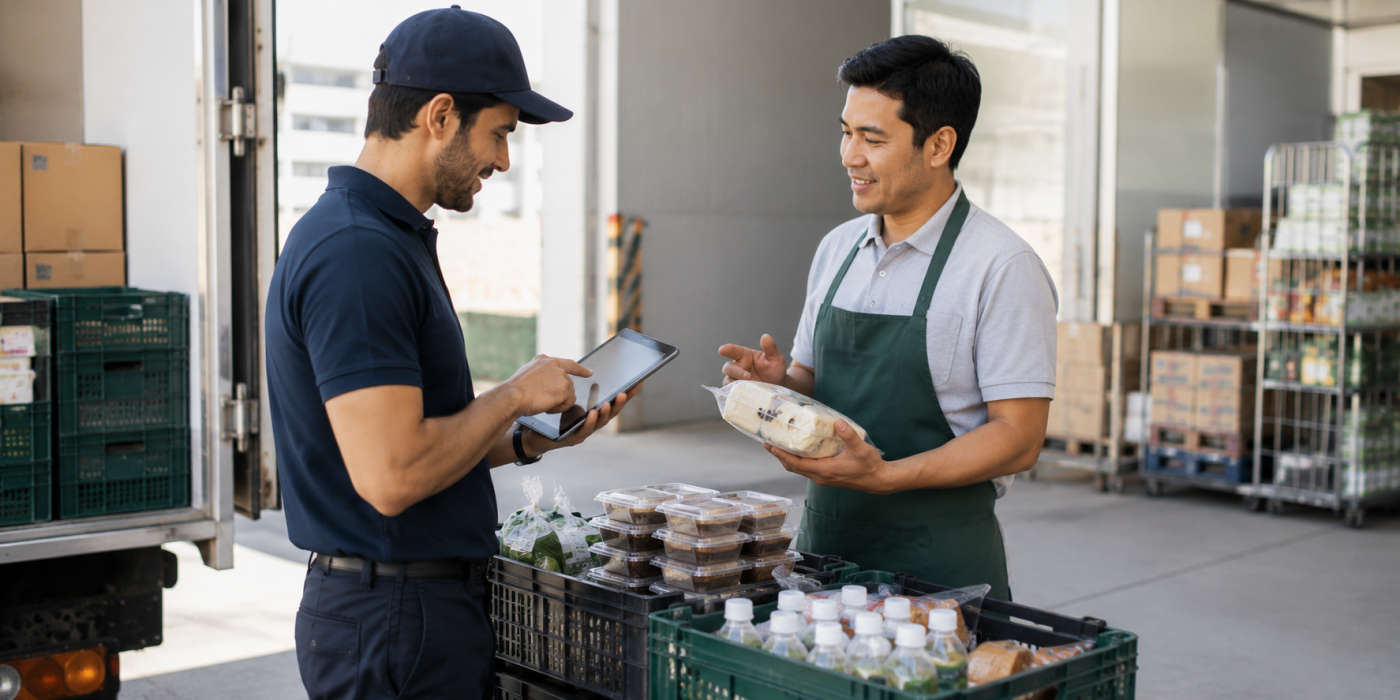
- Confirm product, SKU, unit type, quantity, and price before loading.
- Load the truck in route order so drivers can unload faster.
- Give customers delivery windows based on real route data.
- Tell customers early when a product is short or out of stock.
- Train drivers to explain shortages, credits, and returns clearly.
- Use photos for damaged goods, rejected items, and special cases.
- Record every return with product name, quantity, unit, and reason.
- Make sure invoices match what the customer accepted.
- Review late stops, long service times, and repeated complaints each week.
- Give drivers a mobile workflow instead of loose paper notes.
- Use Distributal to manage service account visits, delivery tasks, credit tasks, billing, and checkout.
- Ask top customers what part of delivery creates the most friction.
- Follow up fast when a customer reports a problem.
Delivery Metrics Every Food DSD Team Should Track
- On-time delivery rate: Tracks how often drivers arrive inside the promised window.
- Order accuracy rate: Shows how often customers receive the right items and quantities.
- Short delivery rate: Measures how often the route delivers less than the customer ordered.
- Damaged product rate: Tracks products that arrive broken, crushed, leaking, or unsellable.
- Return rate: Shows how often customers send products back.
- Credit accuracy rate: Checks whether credits match the real return.
- Invoice dispute rate: Tracks how often customers question the bill.
- Failed delivery rate: Measures stops the driver could not complete.
- Average stop time: Shows how long drivers spend at each customer.
- Complaint rate by route: Helps managers find routes with repeated service problems.
- Complaint rate by product: Shows products that cause repeated issues.
- Proof of delivery completion rate: Tracks signatures, photos, and delivery confirmations.
- Driver task completion rate: Shows whether drivers follow the required workflow.
Use Technology to Make Good Service Repeatable
Technology cannot save a weak delivery process by itself, but it can make a good process easier to follow. This is important in food DSD because drivers handle many tasks during one short store visit. A driver may deliver products, count returns, record credits, confirm billing, take photos, collect a signature, and create a new order. If all of that lives on paper, mistakes are easy. If the driver follows a step-by-step mobile workflow, the visit becomes more consistent. The back office also benefits because admin teams can see what happened at the store without chasing the driver for details. Distributal fits this workflow because it focuses on DSD field operations, including service account visits, delivery tasks, credit tasks, billing, checkout, warehouse-to-vehicle transfers, and driver order creation. The real value comes from consistency. Each driver follows the same process, each return has a reason, and each delivery creates data the team can use.
Turn Customer Complaints Into Route Improvements
A complaint is not only a problem. It is also a map to the weak part of the delivery process. Managers should sort complaints by reason, such as late delivery, damaged product, short order, wrong invoice, missed credit, or rejected product. Each reason points to a different fix. A late delivery may need a better route plan. A short order may need a warehouse check. A credit dispute may need a clearer driver workflow. Damaged products may need better loading rules. Customer feedback should also include the driver’s view because drivers know which stores take too long, which docks create delays, and which customers need clearer instructions. After serious issues, the company should close the loop with the customer. A short message such as “We found the problem and changed the route sequence for next week” can rebuild trust.
Conclusion
To improve customer satisfaction in delivery, food DSD businesses need to focus on the full customer experience. Speed matters, but it is not enough. Customers also care about order accuracy, fresh products, clear delivery windows, fair credits, clean invoices, and professional drivers. The strongest delivery teams make good service repeatable by preparing routes before trucks leave, loading products carefully, training drivers well, recording returns clearly, and fixing repeated complaints. Distributal can help food DSD teams turn this process into daily work through service account visits, delivery tasks, credit tasks, billing, checkout, warehouse-to-vehicle transfers, and driver order creation. Customer satisfaction does not come from one big change. It comes from many small moments done well. The right case arrives, the driver explains the shortage, the credit matches the return, the invoice is clear, and the store can keep selling. When delivery feels reliable, customers trust the distributor, and that trust leads to fewer complaints, stronger relationships, and more repeat orders.
References
- McKinsey & Company — Last-Mile Delivery Transformation Insights Executive strategic analysis detailing how evolving consumer expectations, instant-fulfillment pressures, and technological innovations are structurally reorganizing e-commerce supply chains and urban logistics networks.
- USDA Food Safety and Inspection Service — Thermal Dynamics and Food Safety Frameworks Regulatory guide outlining the thermodynamic thresholds of foodborne pathogens, detailing critical ambient control limits, and defining the physiological impacts of temperature fluctuations on consumer perishables.
