
Mobile-first logistics platforms are changing how modern companies manage deliveries, field sales, warehouse movement, inventory, billing, and customer service. Logistics work does not stay inside an office. Drivers move between routes, warehouse teams handle stock, sales representatives visit stores, and managers need accurate updates throughout the day. A mobile-first system gives these teams the tools they need directly on a phone or tablet. Instead of waiting for paper forms, spreadsheets, calls, or end-of-day reports, teams can record information while the work happens. This gives the business faster updates, fewer mistakes, and better control over daily operations. For companies that depend on field execution, mobile-first logistics platforms can turn disconnected work into a clear and organized workflow.
What Makes a Logistics Platform Mobile-First?
A mobile-first logistics platform puts frontline users at the center of the product design. It does not take a complex desktop system and shrink it into a small screen. The platform uses simple navigation, clear actions, fast forms, and practical workflows that match real work in the field. Drivers may need to confirm delivery quantities from a vehicle. Warehouse teams may need to record stock movement before a truck leaves. Sales teams may need to create an order while standing inside a customer’s store. These tasks require speed, clarity, and reliability. A strong platform helps users complete the right steps without confusion. The Distributal app follows this direction by supporting practical field workflows such as service account visits, delivery tasks, credit tasks, billing, checkout, warehouse-to-vehicle transfers, and driver order creation.
Real-Time Visibility Helps Teams Make Faster Decisions
One major benefit of mobile-first logistics platforms is real-time visibility. Managers can see delivery progress, stock movement, order status, billing updates, route activity, and customer issues much earlier. This helps the business respond before small problems become expensive. When a driver cannot complete a delivery, the office team can check the issue quickly. When a warehouse transfer shows missing stock, the team can investigate before the vehicle starts the route. When a customer return enters the system during a visit, inventory and finance teams can act on that information sooner. Real-time visibility gives every team a shared view of the operation. It also reduces the need for repeated calls, manual follow-ups, and late status updates.
Faster Work for Drivers, Warehouses, and Sales Teams
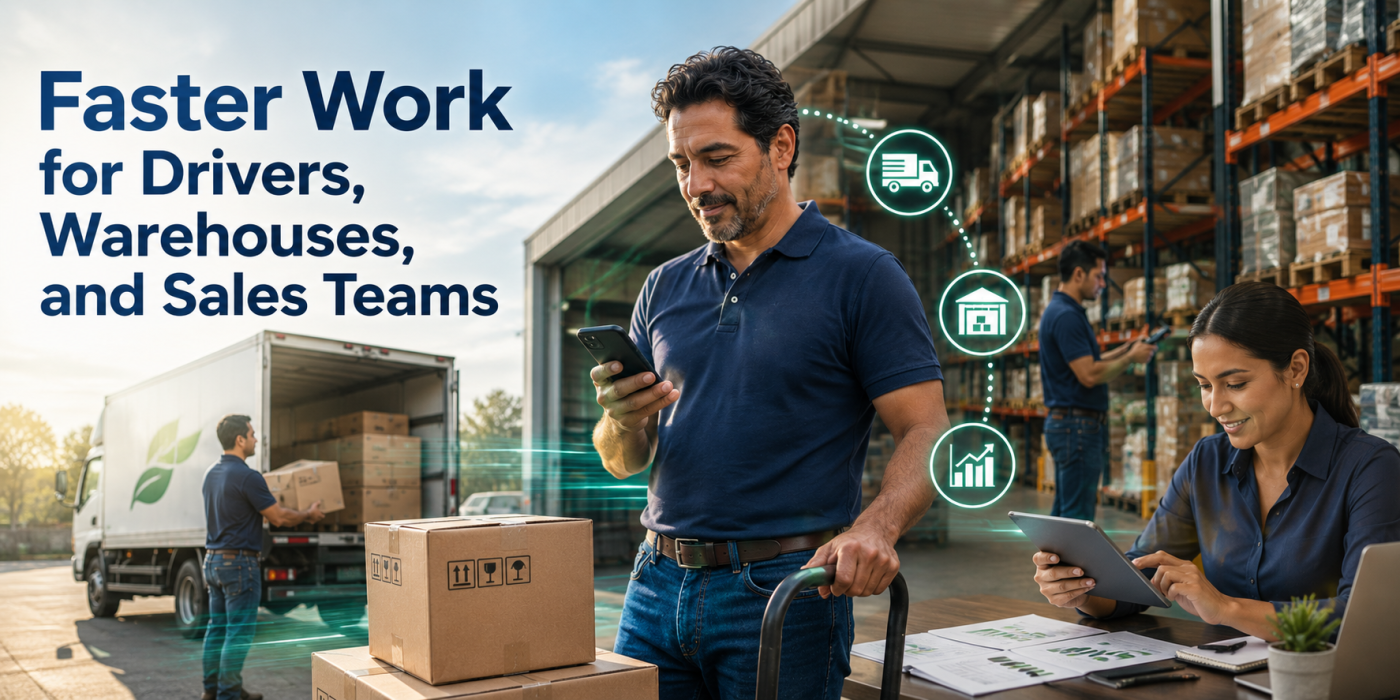
Mobile-first logistics platforms help field teams complete daily work with less friction. The goal is not only to replace paper with digital forms. The goal is to make each task easier, faster, and more accurate for the person doing the work.
- Drivers can view assigned delivery tasks, update order status, confirm quantities, and complete checkout from the road.
- Warehouse teams can record transfers, confirm stock movement, and reduce confusion between warehouse inventory and vehicle inventory.
- Sales teams can visit service accounts, capture customer needs, create orders, and record useful field notes immediately.
- Finance and admin teams can receive cleaner billing and credit information without waiting for manual reports.
- Managers can monitor field activity and identify delays, missing updates, or incomplete tasks faster.
This smoother workflow connects field execution with back-office control. It also helps teams spend more time solving customer needs and less time chasing missing information.
Lower Admin Work and Fewer Costly Errors
Manual logistics processes often depend on paper forms, phone calls, chat messages, and spreadsheets. These tools may work for a small team, but they create risk as order volume grows. A driver may forget to report a change. A warehouse worker may write the wrong quantity. An admin team may enter the same data twice. Over time, these small mistakes can affect inventory, billing, customer trust, and management decisions. Mobile-first logistics platforms reduce these issues by capturing data at the point of action. A driver can confirm a delivery inside the app. A field representative can record credit items during the customer visit. A warehouse team can log stock movement before products leave the building. This gives the business cleaner data and reduces time spent correcting avoidable errors.
Better Inventory, Delivery, and Credit Control
Inventory control becomes harder when products move between warehouses, vehicles, stores, and customer accounts. Mobile-first logistics platforms help companies track these movements more clearly. A good platform can connect delivery items, credit items, returns, billing, and checkout inside one workflow. This approach is especially useful for distributors, route sales teams, direct store delivery businesses, and field-based operations. For example, Distributal can support a store visit where the team counts delivery items, records customer returns, handles damaged goods, finalizes billing, and completes checkout. When one mobile workflow handles these actions, the company gains a clearer view of what moved, what returned, what the customer owes, and what needs follow-up. Better control also helps managers spot patterns, such as frequent returns, route issues, or stock shortages.
Stronger Customer Service in the Field
Customers judge logistics companies by speed, accuracy, and communication. A field team can only deliver great service when it has the right information at the right moment. A driver may need to confirm the latest order detail. A sales representative may need to understand a recent delivery issue. A manager may need to respond before a customer complains. Mobile-first logistics platforms help by giving field teams access to relevant task, customer, and delivery information during the visit. This improves confidence and reduces guesswork. It also helps staff answer questions, record issues, confirm details, and follow up more professionally. Better customer service does not come only from friendly communication. It also depends on accurate information, fast action, and reliable execution.
Why Businesses Choose Mobile-First Logistics Platforms
Many companies choose mobile-first logistics platforms because they need more speed, visibility, and control as operations grow. The benefits reach many parts of the business, from drivers and warehouse teams to finance, sales, and management.
- Improved visibility across deliveries, field visits, inventory, billing, and returns.
- Faster task completion for drivers, warehouse teams, and sales representatives.
- Less dependency on paper forms, spreadsheets, and manual data entry.
- Better communication between field teams and office teams.
- More accurate delivery, credit, checkout, and inventory records.
- Easier onboarding because new team members can follow guided app workflows.
- Stronger control as the business adds more routes, customers, products, and locations.
These benefits make mobile-first logistics platforms valuable for growing distributors, wholesalers, route sales businesses, delivery teams, and companies with field-based operations. The platform becomes more than a reporting tool. It becomes part of the daily operating system for the business.
Easier Scaling Across Routes, Teams, and Locations
Growth often exposes weak points in logistics operations. A process that works for five drivers may fail when the business adds twenty more. A spreadsheet that works for one warehouse may become difficult when stock moves across several locations. Mobile-first logistics platforms help businesses scale because they create standard workflows for every team. Drivers follow the same delivery process. Warehouse staff use the same transfer steps. Sales teams collect customer information in the same format. Managers can compare activity across routes and locations with more confidence. This consistency helps the company train new staff faster and maintain quality as operations become larger. It also gives leadership better data for planning routes, forecasting demand, improving service, and controlling costs.
How to Choose the Right Mobile-First Logistics Platform
The right platform should match the way your team actually works. A beautiful dashboard will not help if drivers, warehouse teams, and field staff struggle to use it during a busy day. Start by reviewing your core workflows, such as delivery management, inventory movement, customer visits, returns, billing, and reporting. Then check whether the platform supports offline work, role-based access, simple task flows, accurate data capture, and useful management reports. A good mobile-first logistics platform should help field teams move faster while giving managers stronger control. It should also support future growth without forcing the business to rebuild its process every time the team expands. For companies that manage store visits, driver orders, warehouse transfers, credits, and billing in one connected flow, an app like Distributal can fit naturally because it focuses on field execution, not only back-office reporting.
References
- McKinsey & Company — Digital Logistics: Technology Race Gathers Momentum Strategic industry analysis exploring the acceleration of digital transformation within supply chains, highlighting how emerging automation technologies, advanced analytics, and software integration are reshaping modern operational capabilities.
- SAP — Understanding Supply Chain Visibility and Enterprise Impact Comprehensive enterprise resource defining the architectural pillars of real-time inventory tracking, multi-tier data sharing, and proactive risk mitigation across global logistics networks.
