
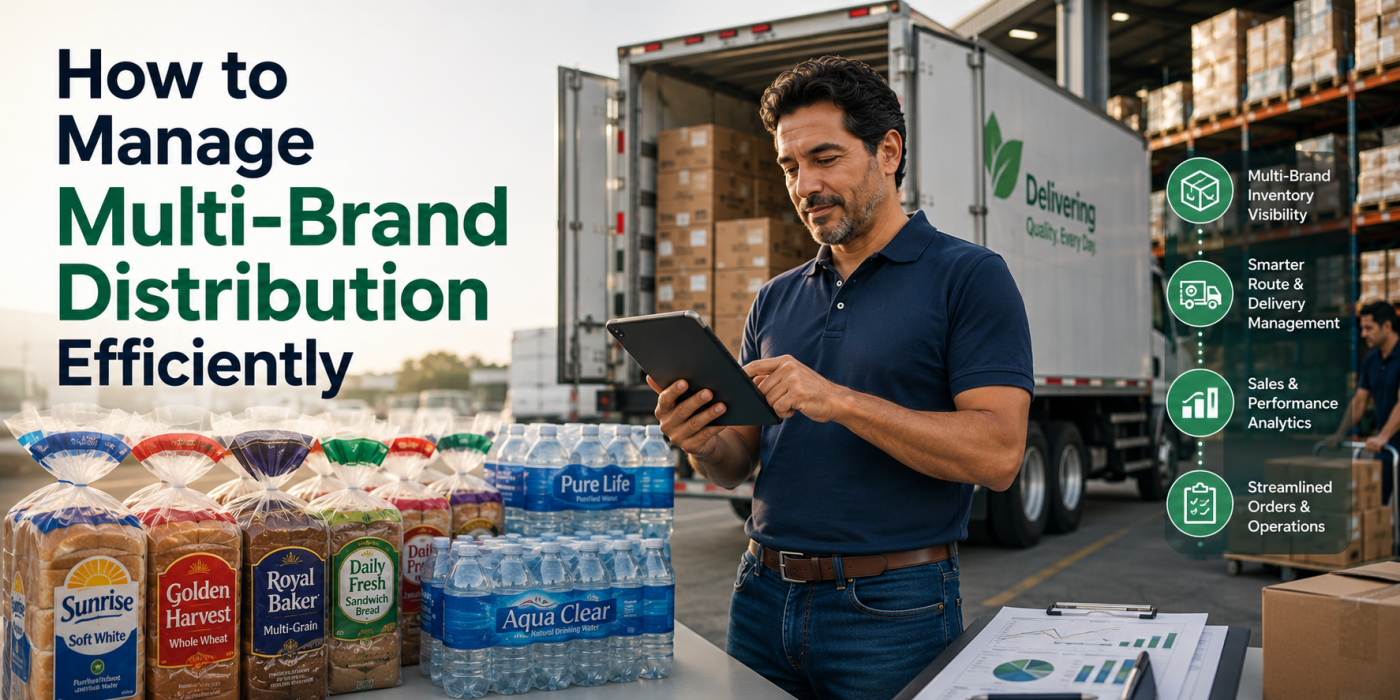
Multi-brand distribution can create strong business growth, but it also brings more operational complexity. A distributor may handle different product lines, pricing rules, promotions, stock levels, delivery requirements, and customer expectations at the same time. Without a clear system, teams can lose control of inventory, routes, billing, returns, and sales performance. Multi-brand distribution needs more than hard work. It needs structured processes, accurate data, and tools that help every team work from the same information. When a company manages multiple brands efficiently, it can serve more customers, reduce waste, improve delivery accuracy, and make better decisions across the entire operation.
What Multi-Brand Distribution Really Means
Multi-brand distribution means a company sells, stores, delivers, and manages products from more than one brand. This model can help distributors expand revenue because they can offer more choices to customers. A store owner may prefer one supplier that can provide beverages, snacks, household goods, personal care items, or specialty products from different brands. That convenience makes the distributor more valuable. However, the business must manage each brand carefully. Different brands may have different margins, case sizes, expiry rules, return policies, discounts, and sales targets. A simple ordering process may become difficult when the team handles hundreds or thousands of SKUs across many customers and routes. Efficient management starts when the company treats multi-brand distribution as a structured operating system, not only a larger product catalog.
Build One Clear Product and Brand Structure
A clean product structure helps teams avoid confusion. Every product should have a clear name, SKU, barcode, unit type, case quantity, brand, category, and price rule. This sounds basic, but many distribution problems begin with messy product data. A driver may deliver the wrong item because two products have similar names. A warehouse team may count units incorrectly because case and unit information does not match. A sales team may quote the wrong price because old product data remains in a spreadsheet. A strong product structure gives the business one reliable source of truth. Managers can compare brand performance more easily, warehouse teams can count stock more accurately, and field teams can select the right item during customer visits. Good product data also supports better reporting because the company can group results by brand, category, customer, route, or sales representative.
Use Better Stock Rules for Every Brand

Each brand may move at a different speed. Some products sell daily, while others move slowly or depend on promotions. Efficient multi-brand distribution requires stock rules that match each product’s real demand pattern.
- Set minimum and maximum stock levels for each fast-moving product.
- Track slow-moving products separately so they do not occupy too much warehouse or vehicle space.
- Review expiry dates for food, beverage, and perishable products before loading vehicles.
- Separate high-priority brands from seasonal or promotional items during planning.
- Compare actual sales with forecasted demand to improve future purchasing.
- Monitor returned, damaged, or out-of-code products by brand.
- Adjust vehicle loading based on route history and customer buying behavior.
These rules help distributors reduce stockouts, overstocks, and unnecessary returns. They also help managers decide which products deserve more space in the warehouse or on the vehicle.
Manage Warehouse and Vehicle Inventory Separately
Multi-brand distribution becomes harder when warehouse inventory and vehicle inventory mix together without clear records. A product may leave the warehouse, sit inside a vehicle, return from a route, or move to another customer account. Without separate tracking, managers may think stock is available when it is already loaded on a truck. The team may also struggle to explain missing items at the end of the day. Efficient distributors treat the warehouse and each vehicle as separate inventory locations. When stock moves from the warehouse to a vehicle, the system should record that transfer. When a driver delivers items, the vehicle stock should decrease. When the driver brings products back, the return should enter the correct location. This level of control helps the company see where each brand’s inventory sits at any moment. It also improves accountability across warehouse staff, drivers, and managers.
Standardize Field Sales and Delivery Workflows
Field teams need simple workflows because they work under time pressure. Drivers visit multiple customers each day. Sales representatives handle orders, questions, returns, and payment details. Warehouse teams prepare stock before routes begin. If every person follows a different process, the company loses consistency. A standardized workflow helps everyone complete work in the same way. For example, a customer visit can follow a clear flow: open the account, review order needs, count delivery items, record credit items, confirm billing, complete checkout, and save the visit. This structure reduces missed steps and creates cleaner records. The Distributal app supports this type of field execution by helping teams manage service account visits, delivery tasks, credit tasks, billing, checkout, warehouse-to-vehicle transfers, and driver order creation in one mobile workflow.
Improve Visibility Across Brands, Routes, and Accounts
Visibility is one of the most important parts of multi-brand distribution. Managers need to know what happens across brands, routes, customers, and field teams. They should be able to answer practical questions quickly. Which brand sells best on each route? Which customers return the most products? Which driver completes the most deliveries on time? Which SKUs often create stock shortages? Which accounts buy multiple brands together? Clear visibility helps leaders move from guessing to decision-making. Digital tools make this easier because they can collect updates from field activity, warehouse movement, order creation, billing, and returns. Real-time supply chain visibility helps companies monitor inventory levels, shipment status, warehouse activity, and operational changes more clearly, according to SAP. Digital logistics also helps companies build faster and more accurate supply chains, a point McKinsey highlights in its research on next-generation supply chain operations.
Reduce Brand Conflict Through Better Reporting
When a distributor manages multiple brands, brand owners may want proof that their products receive enough attention. They may ask about sales volume, coverage, returns, route performance, display execution, or customer adoption. Poor reporting can create trust issues. A distributor may know the team worked hard, but without clear data, it becomes difficult to prove performance. Better reporting helps the business show brand-level results with confidence. Managers can review sales by SKU, delivery volume by route, credit reasons by product, and performance by customer segment. This also helps the distributor manage internal priorities. A high-margin brand may deserve more sales focus. A slow-moving brand may need a promotion or a different route strategy. A brand with frequent returns may need quality checks or better customer education. Strong reporting turns brand management into a measurable process.
Practical Steps to Manage Multi-Brand Distribution Efficiently
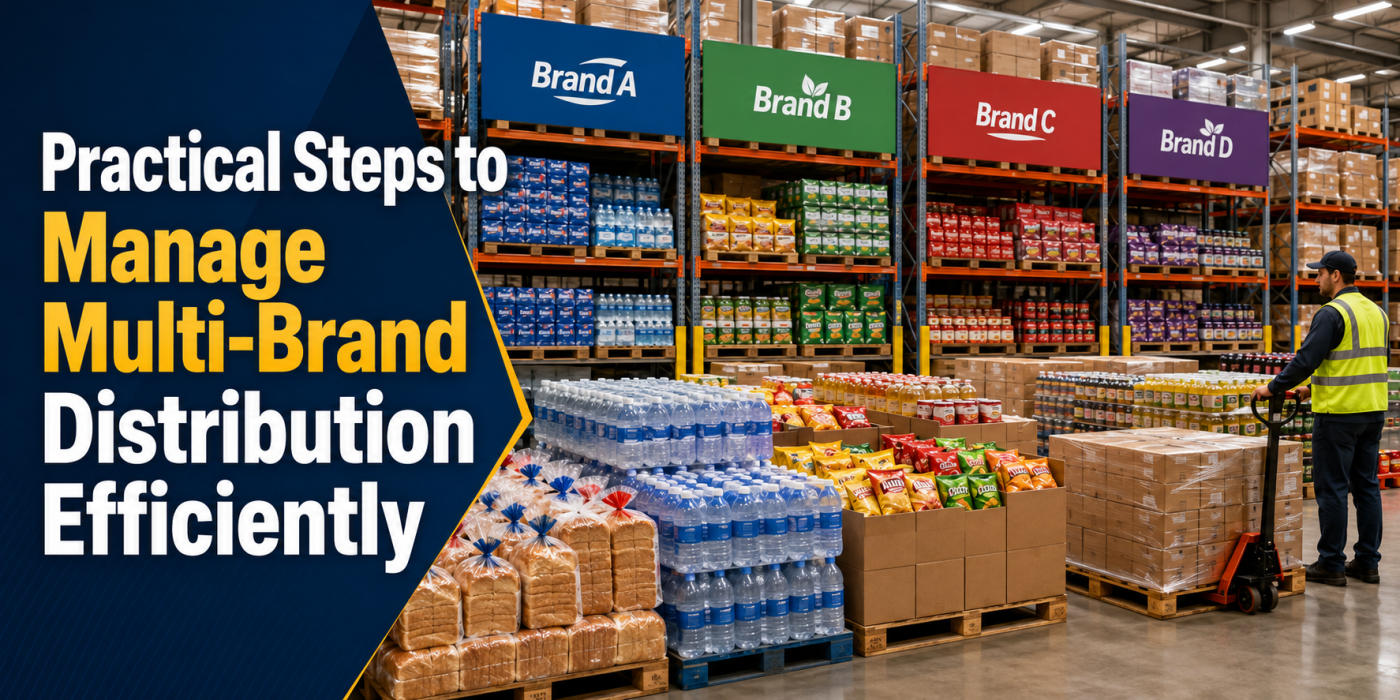
A company does not need to fix everything at once. The best approach is to improve the most important parts of the operation step by step.
- Clean up product data, including SKUs, barcodes, brand names, case sizes, and unit prices.
- Create separate inventory locations for warehouses, vehicles, and return stock.
- Set clear rules for delivery, credits, damaged goods, and out-of-code products.
- Standardize the customer visit flow for drivers and field sales teams.
- Use mobile tools so teams can record updates while work happens.
- Review brand performance weekly instead of waiting until the end of the month.
- Track stockouts, returns, missed deliveries, and billing issues by brand.
- Train every team member on the same process, not only on the software.
- Use reports to improve purchasing, loading, routing, and sales planning.
These steps help the business create stronger control without making daily work too complicated.
How Distributal Supports Multi-Brand Distribution Efficiency
A multi-brand distributor needs tools that match real field operations. Distributal fits this need by focusing on the daily work of distributors, drivers, warehouse teams, and service account managers. Instead of separating delivery, credit, billing, and warehouse movement into disconnected processes, the app helps teams manage them inside a practical mobile workflow. A driver can work through assigned delivery tasks. A warehouse team can handle vehicle transfers. A field user can record delivery items, credit items, returns, and checkout details during the customer visit. This helps the business capture accurate information from the field and reduce the delay between action and reporting. For companies that manage many brands, many SKUs, and many customer accounts, this kind of connected workflow can improve speed, accountability, and operational control.
Conclusion
Efficient multi-brand distribution depends on structure, visibility, and disciplined execution. A distributor must organize product data, control inventory across locations, standardize field workflows, and review performance by brand, route, and customer. These actions help the business reduce errors, improve delivery accuracy, manage stock more effectively, and build stronger relationships with brand partners. Technology also plays an important role because teams need accurate information while work happens, not only after the day ends. Mobile-first tools such as Distributal can support this shift by connecting field sales, deliveries, credits, billing, and warehouse transfers into one clearer process. When a company manages multi-brand distribution well, it gains more than operational efficiency. It builds a stronger foundation for growth.
References
- McKinsey & Company — Supply Chain 4.0: The Next-Generation Digital Supply Chain Strategic research report exploring the intersection of Industry 4.0 and logistics, detailing how big data, advanced analytics, and machine learning transform traditional supply chains into faster, more flexible, and hyper-accurate digital networks.
- SAP — Understanding Supply Chain Visibility and Enterprise Impact Comprehensive enterprise resource defining the architectural pillars of real-time inventory tracking, multi-tier data sharing, and proactive risk mitigation across global logistics ecosystems.
