
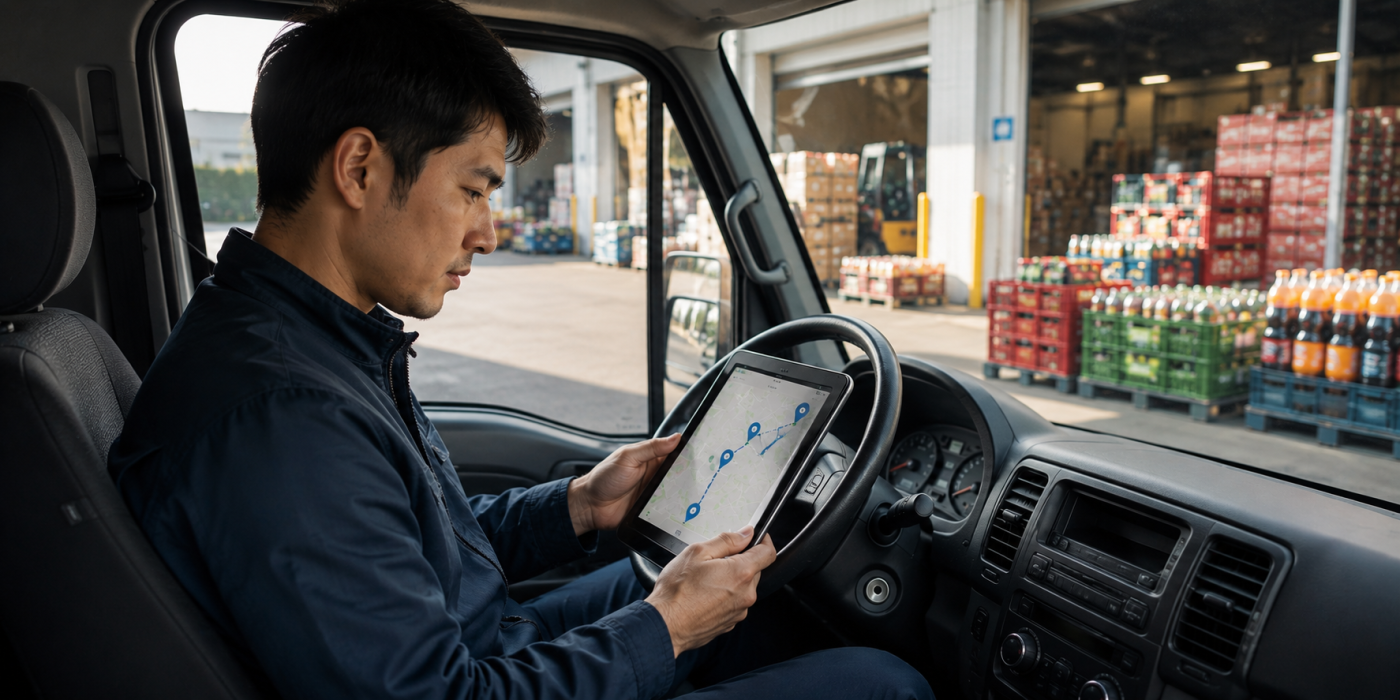
Last-mile delivery optimization is the process of making the final step of a delivery faster, more accurate, and more cost-effective. It focuses on everything that happens between the distribution vehicle and the customer’s receiving area. While many people associate last-mile delivery with eCommerce packages arriving at a home, the same concept is just as important in food Direct Store Delivery (DSD). The difference is that a food DSD driver does much more than leave a package at the door. They unload products, verify quantities, handle returns, issue credits, confirm invoices, and often build relationships with store managers. Every minute spent at each stop affects delivery costs, customer satisfaction, and the number of stores a driver can visit in one day. For food distributors, last-mile delivery optimization is not only about driving shorter routes. It is about improving every activity that happens during the final customer visit.
Last-Mile Delivery Is More Than Driving
Many businesses think route optimization only means finding the shortest path between stops. In reality, most delivery time is often spent after the truck arrives. Drivers may wait for staff, search for products, check invoices, collect signatures, process returns, or explain shortages. These activities create delays that traditional GPS software cannot solve. Food DSD businesses should look at the entire store visit instead of focusing only on travel distance. A faster unloading process, clearer delivery records, or better truck organization may save more time than removing one kilometer from the route. True last-mile delivery optimization improves every step between arrival and departure.
Why Last-Mile Delivery Costs So Much
The last mile is usually the most expensive part of the delivery journey because every stop requires people, vehicles, fuel, time, and customer interaction. Unlike warehouse operations, delivery routes are unpredictable. Traffic changes every day. Customers receive deliveries at different speeds. Some stores have limited parking, while others require security check-ins or special unloading procedures. Small delays quickly add up across dozens of daily stops. If each customer visit takes only five extra minutes, a driver visiting thirty stores loses two and a half hours during the day. That extra time increases labor costs, fuel consumption, overtime, and vehicle wear while reducing the number of deliveries the business can complete.
The Biggest Challenges in Food DSD
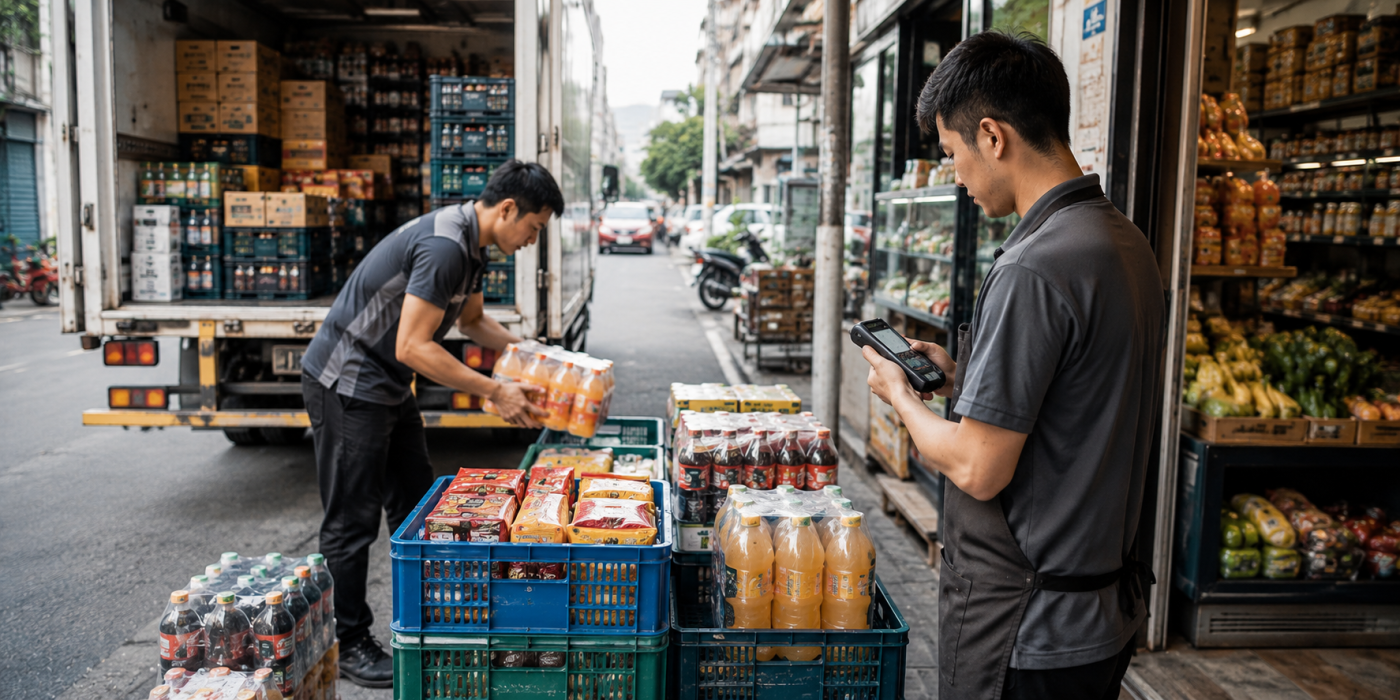
Food DSD operations face additional challenges because products move directly to stores instead of passing through retail distribution centers. Drivers often deliver products with limited shelf life, including dairy, bakery, frozen food, beverages, snacks, and fresh groceries. They must protect product quality while managing credits, returns, damaged goods, stock rotation, and customer requests. A delayed delivery may cause empty shelves during busy shopping hours. Incorrect quantities can create inventory problems for both the distributor and the retailer. Even small billing mistakes may delay payment or reduce customer confidence. Last-mile delivery optimization helps reduce these risks by creating consistent workflows that support drivers throughout every store visit.
Route Planning Is Only One Part of Optimization
Good route planning remains important, but it should never become the only focus. The best routes also consider delivery windows, unloading time, customer priority, vehicle capacity, product type, and traffic patterns. A supermarket receiving several pallets requires more service time than a convenience store accepting a few beverage cases. Frozen products may require tighter schedules than dry goods. Drivers also need enough time to complete paperwork, record returns, and answer customer questions. Businesses that optimize only travel distance often create unrealistic schedules that increase stress for drivers while reducing customer satisfaction.
Standardize Every Customer Visit
Customers appreciate consistency because they know what to expect every time the truck arrives. Drivers should follow the same structured process at every stop, regardless of customer size. They should confirm the order, unload products carefully, verify accepted quantities, record returns, explain shortages, confirm credits, complete billing, and collect proof of delivery before leaving. Standardized workflows reduce forgotten tasks, improve communication, and create cleaner delivery records. They also make driver training easier because every employee follows the same process instead of developing personal habits that vary from route to route.
Use Real-Time Information Instead of Guesswork

Delivery decisions become easier when managers and drivers work with current information instead of outdated paperwork. Drivers should know about product shortages before reaching the customer. Dispatchers should understand route delays while they happen instead of after the truck returns. Office teams should review completed deliveries without waiting for handwritten notes. Real-time delivery data improves communication between warehouse teams, dispatchers, drivers, customer service, and accounting. It also helps businesses react quickly when unexpected problems appear during the day.
Practical Ways to Improve Last-Mile Delivery Optimization
- Build routes using real delivery history instead of estimated travel times.
- Group nearby customers with similar receiving hours.
- Load trucks in delivery sequence.
- Reduce paperwork during customer visits.
- Standardize delivery, return, and credit workflows.
- Capture proof of delivery digitally.
- Record damaged products immediately.
- Share route changes with drivers before departure.
- Review delays by customer instead of by driver alone.
- Monitor average stop time across different customer types.
- Use delivery software that supports food DSD operations.
- Review route performance every week instead of only after complaints.
Measure the Right Delivery KPIs
- Average stop time
- On-time delivery rate
- Order accuracy rate
- Failed delivery rate
- Driver productivity
- Route completion time
- Return rate
- Credit processing time
- Invoice dispute rate
- Customer complaint rate
- Fuel cost per route
- Cost per delivery
- Proof of delivery completion rate
How Distributal Supports Last-Mile Delivery Optimization
Technology cannot remove every delivery challenge, but it can help teams follow better processes every day. Distributal supports food DSD operations by helping distributors manage service account visits, delivery tasks, credit tasks, billing, checkout, warehouse-to-vehicle transfers, and driver order creation within one workflow. Instead of relying on paper notes or memory, drivers can follow structured tasks while managers receive more accurate delivery information. Office teams can review completed deliveries faster, customer service can answer questions with better data, and warehouse teams can understand what happened during each route. The result is a more reliable delivery experience for both drivers and customers.
Last-Mile Optimization Is About Customer Experience
Many companies begin last-mile delivery optimization to reduce costs, but the biggest long-term benefit is often customer loyalty. Customers notice when deliveries arrive on time, products arrive in good condition, invoices match the order, and drivers communicate clearly. They also notice when the opposite happens. Every successful delivery builds confidence that the distributor can support the customer’s business. Over time, that confidence creates stronger relationships, larger orders, and fewer service issues. Optimizing the last mile therefore improves both operational performance and customer satisfaction at the same time.
Conclusion
Last-mile delivery optimization is much more than finding shorter routes. For food DSD businesses, it means improving every activity that happens during the final customer visit, from unloading products to processing returns and confirming billing. Companies that standardize delivery workflows, reduce unnecessary delays, improve communication, and give drivers better tools often see lower operating costs and happier customers. Distributal helps support this approach by bringing delivery tasks, credits, billing, checkout, and service visits into one organized workflow. When every stop becomes faster, more accurate, and easier for the customer, last-mile delivery becomes a competitive advantage instead of a daily challenge.
References
- Council of Supply Chain Management Professionals (CSCMP) — Global Supply Chain Standards and Logistics Lexicon Official institutional repository outlining standard industry definitions, operational frameworks, and strategic best practices for optimizing end-to-end global distribution and material management.
- McKinsey & Company — Travel, Logistics, and Infrastructure Research Hub Executive insights platform delivering analytical data on macroeconomic transit trends, changing consumer fulfillment expectations, and the structural pressures reshaping modern last-mile delivery networks.
