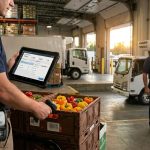
In the modern landscape of global trade, the “Last Mile” is often cited as the most complex and expensive part of the journey. The bridge that connects a completed transit to a successful sale is Proof of Delivery (POD). This document or digital record serves as the ultimate confirmation that a shipment has reached its intended recipient in the expected condition. Whether it is a B2B pallet of raw materials or a B2C parcel dropped on a residential porch, the POD is the definitive “handshake” that concludes a logistics transaction and triggers the final stages of the accounting cycle.
The transition from manual to digital systems has turned POD from a simple signature into a powerful data point. By utilizing specialized tools like the Distributal app, businesses can now capture more than just a name; they record the “who, when, where, and how” of every drop-off. This level of detail is no longer a luxury—it is a requirement for maintaining competitiveness, ensuring customer satisfaction, and protecting a company’s bottom line against the rising tide of delivery-related disputes.
The Role of POD in Supply Chain Management
Proof of Delivery acts as a vital legal instrument that shifts the responsibility of goods from the carrier to the consignee. Once a POD is signed or digitally recorded, the carrier is generally released from liability regarding the safety and security of the items. This document is essential for the “Order-to-Cash” process, as it provides the necessary verification for finance departments to issue invoices. Without a clear and verifiable POD, payments can be delayed for weeks, creating significant bottlenecks in a company’s cash flow and complicating the relationship between vendors and clients.
Comparing Traditional and Electronic Proof of Delivery
| Feature | Traditional Paper POD | Electronic POD (ePOD) |
| Data Entry | Manual and prone to error | Automated and instantaneous |
| Visibility | Delayed until driver returns | Real-time updates via cloud |
| Evidence Type | Signature only | Signature, Photos, GPS, Timestamps |
| Storage | Physical filing cabinets | Secure digital cloud storage |
| Cost | High (Paper, printing, storage) | Low (Software subscription) |
| Customer Experience | Slow and non-transparent | Immediate alerts and tracking |
Why Businesses are Migrating to Digital Solutions

The shift toward digital Proof of Delivery is driven by the need for speed and accuracy. In a high-volume delivery environment, managing thousands of paper receipts is a logistical nightmare that often leads to lost documents and missed billing opportunities. The Distributal app addresses these pain points by centralizing all delivery data into a single, accessible platform. By digitizing the workflow, companies can eliminate the “paper trail” and replace it with a “digital thread” that provides instant answers to customer inquiries and internal audits.
Essential Components for Accurate Delivery Documentation
- Geographic Coordinates: Using GPS to prove the driver was physically at the correct delivery location.
- Photo Documentation: High-resolution images showing the package’s condition and its placement at the site.
- Digital Signatures: A secure, touch-screen signature from the recipient to confirm receipt.
- Automated Timestamps: Non-editable records of exactly when the delivery event occurred.
- Itemized Discrepancy Notes: A section for drivers to note if a box was crushed or if an item was missing from the manifest.
- Driver Identification: Clear records of which personnel handled the final leg of the delivery.
Understanding the Legal Importance of POD
From a legal perspective, the Proof of Delivery is a contractually binding acknowledgment. It serves as evidence in court or during insurance mediation if a shipment is claimed to be lost or damaged. If a business cannot produce a valid POD, they are often held liable for the full value of the goods, regardless of whether the delivery actually took place. Digital systems enhance this legal protection by providing metadata—such as the exact IP address or device ID used to capture a signature—making it significantly harder for fraudulent claims to succeed.
Streamlining Workflows with the Distributal App
- Instant Dispatch Syncing: Routes and manifests are sent directly to the driver’s smartphone, reducing morning prep time.
- Offline Data Capture: Drivers can collect information in remote areas or elevators without losing progress.
- Customizable Forms: Businesses can tailor the POD requirements to include specific questions or checklists for different clients.
- Automated Customer Notifications: The system can automatically email a copy of the POD to the client the moment it is captured.
- Fleet Performance Analytics: Managers can view average delivery times and success rates to optimize future routing.
- Paperless Environment: Significant reduction in carbon footprint and administrative overhead by removing physical forms.
POD in Specialized Logistics: DSD Distribution
A critical application of Proof of Delivery is found in Direct Store Delivery (DSD). In this model, manufacturers deliver products directly to retail stores, bypassing central warehouses. Because DSD often involves fast-moving consumer goods and high-frequency stops, the POD process must be lightning-fast. Using dedicated DSD software, drivers can manage inventory on-site and capture proof of delivery simultaneously. This ensures that the retailer’s shelf stays stocked and the manufacturer’s records remain accurate in real-time.
Solving Discrepancies in Food and Beverage Logistics
The food industry relies heavily on Top 10 DSD Software for Food Distribution to manage perishable goods. In these scenarios, POD is not just about receipt; it’s about quality control. If a crate of produce arrives damaged, the driver uses the Distributal app to log the discrepancy immediately. This high level of detail allows for “clean invoicing,” where the customer is only billed for the items they accepted in good condition. Integrating robust DSD software with digital POD capabilities is the only way to handle the high stakes of food logistics without massive revenue leakage.
Operational Benefits of Real-Time POD Tracking

| Benefit | Operational Impact |
| Reduced Admin Time | Staff spend less time scanning and filing paper documents. |
| Faster Invoicing | Invoices can be sent as soon as the POD is uploaded. |
| Improved Accuracy | GPS verification ensures drivers are at the right house/warehouse. |
| Enhanced Security | Digital records are encrypted and cannot be easily forged or lost. |
| Scalability | Software handles 10 or 10,000 deliveries with equal ease. |
The Impact of POD on Third-Party Logistics (3PL)
For third-party logistics providers, Proof of Delivery is the “proof of work” required to get paid by their clients. 3PLs operate on thin margins where efficiency is everything. By implementing the Distributal app, these providers can offer their clients a higher level of service, including real-time dashboards where the client can see PODs as they are generated. This high-tech approach allows smaller 3PLs to compete with industry giants by offering the same level of digital sophistication and transparency that modern retailers demand from their shipping partners.
Future Trends in Delivery Verification
We are entering an era where Proof of Delivery will become increasingly automated and contactless. Technologies such as biometrics, where a recipient might use a fingerprint or facial recognition on their own device to “sign” for a package, are on the horizon. Additionally, as drone and autonomous vehicle deliveries become more common, the POD will likely transition to a purely machine-to-machine exchange of encrypted tokens. Despite these high-tech shifts, the fundamental need for a reliable, verifiable record of delivery remains the cornerstone of global commerce.ommon, the POD will likely transition to a purely machine-to-machine exchange of encrypted tokens. Despite these high-tech shifts, the fundamental need for a reliable, verifiable record of delivery remains the cornerstone of global commerce.
References
- Logistics Management Magazine: A premier resource for logistics professionals covering the latest trends in freight, transportation, and supply chain technology.
- The Chartered Institute of Logistics and Transport (CILT): An international professional body for everyone who works within the spheres of transport and logistics, providing industry-recognized best practices.
Get Started with Distributal Today
Ready to streamline your field operations? Experience the speed of mobile-first invoicing and real-time inventory management yourself. The Distributal app is now available for download on all major platforms