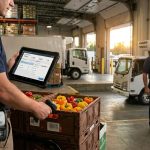
In the food distribution world, precision is a necessity for survival. Delivery errors are a major drain on company profits. These mistakes affect immediate margins and long-term brand reputation. When a shipment arrives with missing or expired items, the ripple effect is felt everywhere. These errors cause costly redeliveries and administrative overhead. They often lead to the disposal of perishable goods. Beyond money, the loss of customer trust is the most damaging result. In an industry built on reliability, consistent mistakes drive clients to your competitors. Reducing delivery errors is the best way to secure your market position and ensure long-term growth.
Why Delivery Errors Occur in Manual Distribution Systems

Manual systems create a “visibility gap” that grows with every new order. Most issues stem from data entry lag and poor team communication. As volumes increase, these manual systems fail to scale. Paper-based workflows lead to significant delivery errors because they lack real-time validation. Warehouse staff cannot track inventory accurately without live data. This confusion often spills over into the fulfillment process. Many distributors still rely on spreadsheets that don’t update fast enough.
This lack of precision is especially dangerous in DSD distribution. Unlike traditional models, DSD requires drivers to manage inventory right at the store shelf. Any mistake in a manual manifest means the retailer ends up with empty shelves or the wrong stock. Because there is no central warehouse to catch these mistakes, the burden of accuracy falls entirely on the driver’s paperwork.
Implementing Standardized Picking Procedures to Ensure Accuracy
Standardization is the bedrock of a successful warehouse. Food items require specific handling to avoid mistakes. Without clear protocols, staff rely on their own intuition. This leads to inconsistent results and frequent errors. A standardized path through the warehouse minimizes travel time. It also reduces the chance of grabbing the wrong SKU. Procedures should include mandatory checks for expiration dates. Verifying the physical condition of packaging is also essential. When you remove guesswork, you lower the rate of mis-picks. Consistent picking is the key to a more predictable supply chain.
Leveraging the Distributal App for Real-Time Inventory Control
Specialized software has changed how food distributors manage shipments. Real-time visibility is the best tool to stop delivery errors. Synced systems prevent you from selling out-of-stock items. This keeps your promises to customers reliable. Utilizing a platform like the Distributal app allows you to track every movement. You can monitor goods from the manufacturer to the delivery truck. Digital logs make it easy to see where a mistake happened. Instead of guessing, management can look at factual data. This transparency fosters a culture of accountability. Better tools lead to fewer manual mistakes across the board.
How to Minimize Logistics Mistakes and Reduce Delivery Errors
| Strategy | How to Implement |
|---|---|
| Barcode Scanning | Use a scan-at-every-step policy to ensure the physical item matches the digital order. |
| Automated Weight Checks | Use scales to flag discrepancies if a pallet weight does not match the manifest. |
| Mobile Driver Apps | Use the Distributal app to verify deliveries on-site and capture digital signatures. |
| Zone Picking | Divide the warehouse into dry, refrigerated, and frozen zones to reduce picker confusion. |
| Cycle Counting | Perform frequent counts of high-velocity items to keep inventory data accurate. |
| Route Optimization | Plan efficient routes to reduce driver stress and prevent rushed drop-off mistakes. |
To achieve a significant reduction in delivery errors, you must look at operations holistically. Implementing the right systems and processes at every stage, from warehouse picking to last-mile delivery, can dramatically cut costly mistakes, improve customer satisfaction, and protect your brand reputation. Here are some effective strategies:
By combining technology-driven solutions like barcode scanning and automated weight checks with strong human processes like staff training and cycle counting, logistics operations can build multiple layers of error prevention. No single strategy eliminates mistakes entirely — but together, they create a resilient system that catches problems early, minimizes their impact, and continuously improves over time.
Enhancing Communication Between Warehouse and Fleet Teams
Communication gaps often occur during the hand-off to drivers. When departments operate in silos, information is lost quickly. This leads to delivery errors that go unnoticed until the final stop. Improving communication requires a cultural shift and better tools. Drivers must be able to report issues during the loading process. Warehouse managers should push updates to drivers in real-time. This flow of info ensures everyone has the same facts. Shared data prevents small issues from becoming major customer complaints. A connected team is a more accurate team.
Improving Order Verification at the Point of Delivery

The delivery site is your final line of defense. Even a perfect warehouse can fail if the driver drops the wrong pallet. Strict verification protocols at the point of delivery are essential. Drivers and receiving clerks should walk through the order together. This confirms that the shipment is complete and correct. While this takes time, it is cheaper than a return trip. Modern tools make this verification process much faster. Drivers can scan items as they unload for instant confirmation. This professional touch reinforces your commitment to quality and service.
Best Practices for Maintaining Quality Control in Food Logistics
High standards require commitment to specific operational habits. Consider these best practices to reduce delivery errors:
- FIFO Enforcement: Strictly follow First-In-First-Out to prevent sending expired or spoiled goods.
- Temp Monitoring: Use sensors to track refrigerated units and prevent refused deliveries.
- Clear Labeling: Use large fonts and high-contrast barcodes on all pallets and cartons.
- Double-Check Stations: Have a second staff member verify high-value or complex orders.
- Customer Notes: Store specific delivery preferences in your software to meet client expectations.
- Incentive Programs: Reward teams for high accuracy rates to encourage a culture of precision.
The Role of Employee Training in Reducing Delivery Errors
The human element is a major factor in distribution accuracy. Poorly trained staff are more likely to make careless mistakes. Training should explain both the “how” and the “why” of the job. Employees need to know how a mis-scan affects the customer. When they understand the impact, they take more pride in their work. Training must be an ongoing process for all team members. Use morning meetings to discuss recent delivery errors and solutions. This creates a focus on improvement rather than blame. A skilled workforce is your best asset for maintaining high standards.
Utilizing Customer Feedback to Refine Distribution Workflows
Customers are the first to know when your system fails. Their feedback is a goldmine for fixing delivery errors. Treat every complaint as a diagnostic tool for your business. Analyzing return codes can reveal systemic issues in the warehouse. If items arrive damaged, your stacking methods may be the problem. Closing the feedback loop is essential for growth. Follow up with customers once you implement a solution. This shows that you value their partnership and their time. Proactive surveys can also find small frictions before they become errors.
Continuous Improvement and the Future of Delivery Accuracy
Reaching zero delivery errors is a continuous journey. As technology evolves, your strategies must adapt as well. Artificial intelligence offers new ways to predict potential mistakes. Staying ahead requires a willingness to try new digital tools. Clean and accessible data is the foundation of future success. Reducing errors builds a more sustainable and profitable business. Every mistake you eliminate helps your bottom line directly. By using the Distributal app, you can achieve new levels of precision. Focus on your core mission: delivering quality food safely and accurately.
References
- Inbound Logistics: A trade publication covering supply chain best practices and warehouse management for food professionals.
- Food Logistics Magazine: Focuses on the food supply chain, technology trends, and cold chain efficiency.
Get Started with Distributal Today
Ready to streamline your field operations? Experience the speed of mobile-first invoicing and real-time inventory management yourself. The Distributal app is now available for download on all major platforms