

Logistics companies often focus on visible operating costs such as fuel, drivers, vehicles, warehouse space, and delivery delays. However, many businesses lose a large amount of money in the back office without noticing it. Manual order entry, repeated phone calls, spreadsheet updates, invoice checking, delivery coordination, and customer follow-ups can quietly increase costs every day.
To Reduce Back-Office Costs in Logistics, companies need more than simple cost cutting. They need better systems, cleaner workflows, and smarter use of automation. The goal is not to remove people from the operation. The goal is to help the team spend less time on repetitive admin work and more time solving real operational problems.
Modern logistics depends on speed, accuracy, visibility, and coordination. The World Bank’s Logistics Performance Index highlights tracking, tracing, timeliness, and logistics service quality as key parts of logistics performance. These areas are strongly connected to how well the back office works behind the scenes.
Understand Where Back-Office Costs Come From
Before a logistics company can reduce costs, it needs to understand where those costs are hiding. Back-office costs are not always easy to see because they are spread across different teams, tools, and daily habits. A small delay in order confirmation may not look expensive at first, but when it happens hundreds of times per month, it creates extra labor, late updates, customer complaints, and billing issues.
Common back-office tasks include order processing, job assignment, proof of delivery checking, customer communication, driver coordination, payment follow-up, invoice creation, document management, and reporting. These tasks become even more costly when logistics teams also deal with wider operational problems such as delayed deliveries, poor coordination, and inconsistent order handling. For a deeper look at these issues, read our guide on food distribution challenges and how to fix them.
Many logistics companies still use spreadsheets, chat apps, paper forms, and disconnected systems to manage daily work. This creates duplicated effort. One person enters an order, another person checks it, another person updates the delivery status, and another person sends the customer an update. Each step adds time and increases the chance of mistakes.
To Reduce Back-Office Costs in Logistics, the first step is to map the full workflow. Look at what happens from the moment a customer places a transport request until the job is completed, billed, and reported. This makes it easier to see which tasks are repeated, which tasks cause delays, and which tasks can be automated.
Replace Manual Data Entry With Digital Workflows

Manual data entry is one of the biggest sources of hidden back-office cost. Every time staff need to copy information from one system to another, the company pays for extra time and takes on extra risk. A wrong address, missing phone number, incorrect delivery date, or wrong order quantity can create expensive problems later.
Digital workflows reduce this problem by allowing information to move through the business without being retyped again and again. For example, when a customer submits a delivery request through a digital form or logistics app, the system can automatically store the job details, assign a reference number, notify the right team, and prepare the job for scheduling.
This is where logistics platforms such as Distributal can help. Instead of managing transport jobs through scattered messages and spreadsheets, a company can use Distributal to organize job requests, delivery details, driver updates, and operational records in one workflow. This helps reduce repeated admin work and keeps the team aligned.
To Reduce Back-Office Costs in Logistics, businesses should treat every repeated data entry task as a warning sign. If the same information is typed more than once, there is usually an opportunity to simplify the workflow.
Improve Job Assignment and Dispatch Coordination
Dispatch coordination is another area where back-office costs grow quickly. When dispatchers need to call drivers, check availability manually, confirm routes, update customers, and adjust jobs in real time, the workload becomes heavy. If the process is not organized, the business may need more admin staff just to keep up with daily operations.
A better dispatch process reduces confusion. The back office should be able to see which jobs are pending, assigned, in progress, completed, delayed, or cancelled. Drivers should receive clear job information, and the operations team should not need to ask for the same update multiple times.
The more visibility a logistics company has, the less time it spends chasing information. Digital dispatch tools can help teams assign jobs faster, track progress, and reduce unnecessary communication. This does not remove the need for human judgment. It simply gives the team better information so they can make faster decisions.
Using Distributal as part of the workflow can also support clearer job handling. When delivery jobs and updates are managed in one place, the back office can spend less time searching for information and more time improving service quality.
Automate Repetitive Admin Tasks
Automation is one of the most effective ways to Reduce Back-Office Costs in Logistics. Many admin tasks follow the same pattern every day. These tasks do not always require manual decision-making, but they consume a lot of staff time when handled one by one.
Examples include sending order confirmations, updating delivery status, creating job numbers, reminding drivers to upload proof of delivery, notifying customers about completed jobs, and generating basic reports. When these tasks are automated, the team can focus on exceptions instead of routine updates.
Automation also improves consistency. A human team may forget to send a message during a busy day, but a system can send it automatically when a job reaches a certain stage. This reduces missed updates and improves customer trust.
McKinsey has noted that AI and automation can improve efficiency and decision-making in supply chains, although companies still need the right technology, data, and talent to get full value from these tools.
A simple rule is useful here: automate the predictable tasks, but keep people responsible for decisions that require judgment. This balance helps reduce cost without reducing service quality.
Back-Office Tasks Logistics Companies Should Automate
Some back-office tasks are better suited for automation than others. The best tasks to automate are repetitive, rule-based, and high-volume. These tasks usually do not need deep human judgment, but they can create delays when handled manually.
To Reduce Back-Office Costs in Logistics, companies should start with the tasks that happen most often and cause the most admin pressure. These are usually the easiest areas to improve first.
- Order confirmation emails or messages
- Job reference number creation
- Driver assignment notifications
- Proof of delivery reminders
- Delivery status updates
- Customer delivery notifications
- Invoice draft preparation
- Repeated data validation checks
- Daily operation summary reports
- Internal alerts for delayed or incomplete jobs
Automation should not be introduced randomly. Each automated step should solve a real problem in the workflow. For example, if customers often ask, “Where is my delivery?” then automated status updates can reduce both customer support workload and customer frustration.
Reduce Errors With Cleaner Data
Errors are expensive in logistics. A small mistake in the back office can create a big problem on the road. Wrong delivery details can lead to failed deliveries. Missing job information can delay dispatch. Incorrect billing data can slow down payment. Poor records can make reporting unreliable.
Clean data helps reduce these problems. Logistics teams should standardize how they collect names, phone numbers, addresses, delivery windows, item details, job status, and proof of delivery. When every team uses the same structure, it becomes easier to search, report, and make decisions.
A digital system can also reduce errors by using required fields, dropdown options, validation rules, and automatic checks. This is much safer than relying only on free-text notes or manual spreadsheet updates.
To Reduce Back-Office Costs in Logistics, companies should not only focus on working faster. They should also focus on reducing rework. Every incorrect entry creates extra work later. Cleaner data helps the business avoid that hidden cost.
Centralize Communication Across Teams
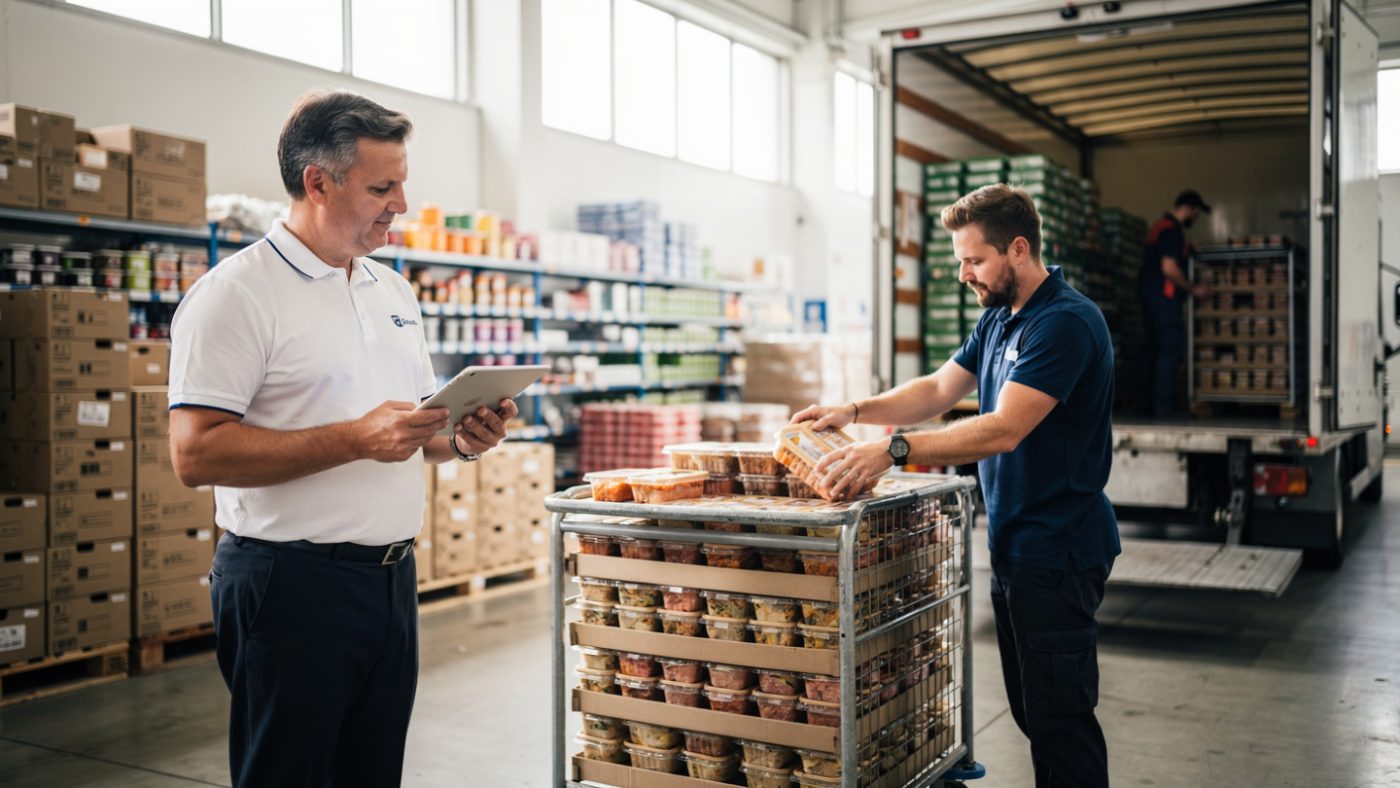
Poor communication is another major cause of back-office cost. When information is spread across phone calls, chat groups, personal messages, emails, and spreadsheets, the team spends too much time looking for the truth. Different people may have different versions of the same job status.
Centralized communication makes logistics operations easier to manage. The back office should have one reliable place to check job details, driver updates, customer notes, delivery status, and related documents. This reduces confusion and helps new team members understand what is happening without asking around.
Centralization also improves accountability. When updates are stored in the system, it becomes easier to see what happened, when it happened, and who handled it. This is useful for resolving customer complaints, reviewing delays, and improving internal performance.
Distributal can naturally fit into this type of workflow by helping logistics teams organize delivery and transport-related information in a structured way. When the team works from a shared source of truth, the business becomes less dependent on memory, manual follow-up, and scattered conversations.
Key Metrics to Track When Reducing Back-Office Costs
A company cannot improve what it does not measure. To Reduce Back-Office Costs in Logistics, managers should track a small set of practical metrics that show whether the back office is becoming faster, cleaner, and more efficient.
The goal is not to create complicated reports. The goal is to understand where time and money are being lost.
- Average time to process a new job
- Number of manual touches per order
- Percentage of jobs with missing information
- Number of customer follow-up requests
- Time spent on invoice preparation
- Proof of delivery completion rate
- Number of billing corrections
- Number of failed or delayed deliveries caused by admin errors
- Staff hours spent on repetitive reporting
- Customer response time
These metrics help identify the real source of cost. For example, if invoice preparation takes too long, the issue may not be the finance team. The real problem may be missing proof of delivery, unclear job records, or inconsistent pricing information earlier in the workflow.
Use Technology Without Overcomplicating the Operation
Technology should make logistics operations simpler, not harder. Some companies try to solve back-office problems by adding too many tools at once. This can create more confusion, more training needs, and more disconnected data.
The best approach is to start with the core workflow. Identify the most painful admin tasks first, then choose tools that solve those problems clearly. A logistics business does not need every advanced feature on day one. It needs a system that helps the team process jobs faster, reduce mistakes, and improve visibility.
This is why practical logistics tools like Distributal can be useful for growing teams. The focus should be on making daily operations easier: managing jobs, organizing information, improving coordination, and reducing repetitive admin work.
To Reduce Back-Office Costs in Logistics, technology must match the way the business actually works. A simple tool that the team uses every day is more valuable than a complex system that people avoid.
Train the Team and Standardize the Process
Even the best system will not reduce costs if the team does not use it correctly. Back-office improvement requires clear processes, team training, and consistent habits. Everyone should understand how to create a job, update a status, record delivery information, handle exceptions, and close a completed order.
Standard operating procedures are important because they reduce variation. If each staff member manages jobs in a different way, the company will struggle to scale. Standardization helps the business deliver the same level of service even as order volume grows.
Training should be practical and simple. Instead of giving the team long manuals, show them the exact workflow they need to follow. Use real examples from daily operations. Review common mistakes and explain why the new process matters.
When people understand that better systems reduce stress and repeated work, they are more likely to support the change. Cost reduction should not feel like punishment. It should feel like removing unnecessary work from the team’s day.
Conclusion
To Reduce Back-Office Costs in Logistics, companies need to look beyond fuel, vehicles, and warehouse expenses. The back office can quietly create high costs through manual data entry, repeated communication, admin errors, slow dispatch coordination, and disconnected systems.
The most effective solution is to simplify the workflow. Start by mapping the current process, then remove repeated steps, automate predictable tasks, centralize information, improve data quality, and track the right metrics. These improvements help the business reduce labor waste, avoid costly mistakes, and improve customer service.
Tools like Distributal can support this shift by helping logistics teams manage jobs and operational information more clearly. When the back office becomes faster and more organized, the entire logistics operation becomes more efficient.
Reducing back-office costs is not only about saving money. It is about building a logistics operation that can grow without becoming messy, slow, or expensive to manage.
References
- World Bank Group: Logistics Performance Index (LPI) – A global benchmark evaluating logistics efficiency, focusing on tracking, timeliness, and service quality.
- McKinsey & Company: AI & Automation in Supply Chain – Research exploring how advanced technologies drive operational performance and smarter decision-making.
Get Started with Distributal Today
Ready to streamline your field operations? Experience the speed of mobile-first invoicing and real-time inventory management yourself. The Distributal app is now available for download on all major platforms
